THE COSMIC DANCE: INTELLIGENCE IN NATURE
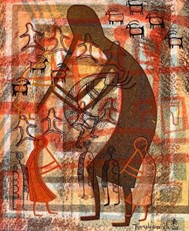
Intelligence in Nature makes the radical assumption that the Earth and all other life-forms are integral to the web of life. Everything is “animate” and thrumming with creative energy. This is a far cry from the “dead world theories” that pervades the Western culture today. The word animism comes from the Latin word anima which refers to spirit, soul or life-force. It is the oldest religion of humanity dating back as far back as 300,000 years ago. Within the animistic worldview all forms of life on this planet are engaged in a web of relationships. As Cheyenne River Lakota elder Tiokasin Ghosthorse notes, “Mitakuye Oyasin–all my relations actually means the universe is speaking through the energy of the relationship between you and I and all things, and therefore everything is related to everything else.” These relationships are central to defining one’s role within the community of living things.
In order to arrive at this deep sense of interrelationships, we must create a major paradigm shift, requiring us to form a constellation of concepts, values, perceptions, and shared practices which help us understand our shared reality within the community. Spiritual ecology (or deep ecology) is a major paradigm shift away from the influences of Descartes, Galileo and Newton. It recognizes the fundamental interdependence of all phenomena and sees all things as embedded (and dependent on) the cyclical processes of nature.
RESOURCES
Intelligence in Nature: An Inquiry into Knowledge
by Jeremy Narby, 2006.
Anthropologist Jeremy Narby has altered how we understand the Shamanic cultures and traditions that have undergone a worldwide revival in recent years. Now, in one of his most extraordinary journeys, Narby travels the globe-from the Amazon Basin to the Far East-to probe what traditional healers and pioneering researchers understand about the intelligence present in all forms of life.
Intelligence in Nature presents overwhelming illustrative evidence that independent intelligence is not unique to humanity alone. Indeed, bacteria, plants, animals, and other forms of nonhuman life display an uncanny penchant for self-deterministic decisions, patterns, and actions.
Narby presents the first in-depth anthropological study of this concept in the West. He not only uncovers a mysterious thread of intelligent behavior within the natural world but also probes the question of what humanity can learn from nature’s economy and knowingness in its own search for a saner and more sustainable way of life.
The predominant way of knowing in the western culture is to prove a theory through measurement. It’s no surprise that empirical evidence has to be produced in order to “prove” nature’s intelligence.
Confessions of a White Vampire (article in Granta)

Sand Talk: How Indigenous Thinking Can Save the World
by Tyson Yunkaporta, 2020.
In Sand Talk, Yunkaporta provides a new model for our everyday lives. Rich in ideas and inspiration, it explains how lines and symbols and shapes can help us make sense of our living, intelligent world. It’s about how we learn and how we remember. It’s about talking to everyone, observing other life forms, and listening carefully. It’s about finding different ways to look at things. Most of all it’s about a very special way of thinking, of learning to see from a native perspective, one that is spiritually and physically tied to the earth around us, and how it can save our world.
PDF supplement to Sand Talk
with a summary of what the symbolism of “sand talk” means.
Deakin University page (has web links & videos)
Also the videos to the right/below elaborate on Sand Talk.
The Hidden Life of Trees
by Peter Wohllenben (2017)
Are trees social beings? In The Hidden Life of Trees forester and author Peter Wohlleben convincingly makes the case that, yes, the forest is a social network. He draws on groundbreaking scientific discoveries to describe how trees are like human families: tree parents live together with their children, communicate with them, support them as they grow, share nutrients with those who are sick or struggling, and even warn each other of impending dangers. Wohlleben also shares his deep love of woods and forests, explaining the amazing processes of life, death, and regeneration that he has observed in his woodland.
Author page for Peter Wohllenben
The Hidden Life of Trees: How Forests Secretly Communicate | Full Documentary
What if trees could talk — and listen? Intelligent Trees takes you deep into the hidden world of forest communication, revealing how trees interact, support each other, and even protect their offspring. Inspired by the groundbreaking work of forester Peter Wohlleben and forest ecologist Suzanne Simard, this eye-opening documentary explores the complex social lives of trees. Using stunning cinematography and scientific insights, it uncovers how trees form networks, share nutrients, warn each other of danger, and thrive as communities — not as individuals.
YouTube (45:14)
TED Talk: How trees talk to each other | Suzanne Simard
“A forest is much more than what you see,” says ecologist Suzanne Simard. Her 30 years of research in Canadian forests have led to an astounding discovery — trees talk, often and over vast distances. Learn more about the harmonious yet complicated social lives of trees and prepare to see the natural world with new eyes.
YouTube (18:25)
When The Forest Breathes
by Suzanne Simard (2026)
Trailblazing ecologist Suzanne Simard has watched as timber companies leave forests at higher risk for wildfires, water crises, and plant and animal extinction. But her research has the potential to chart a new course. The forest, she reveals, is a symphony of finely honed cycles of regeneration—from mushrooms breaking down logs to dying elder trees passing their genetic knowledge to younger ones—that hold the key to protecting our forests. Working closely with local Indigenous communities, whose models of responsible forestry have been largely dismissed, Simard examines how human interventions—particularly destruction of the overstory’s mother trees—endanger new growth and longevity. If we can honor the tools that trees have honed for sharing intergenerational wisdom, she argues, we can protect these sacred places for many years to come.
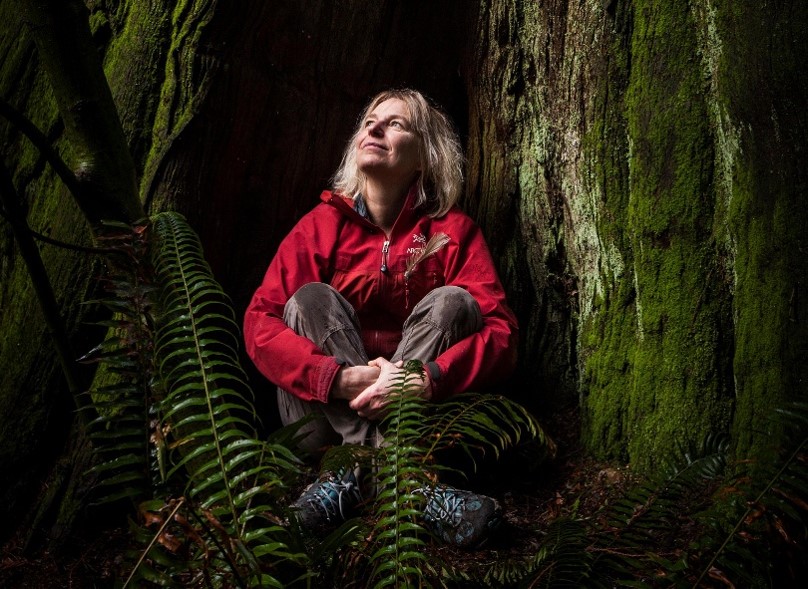
Author page for Suzanne Simard
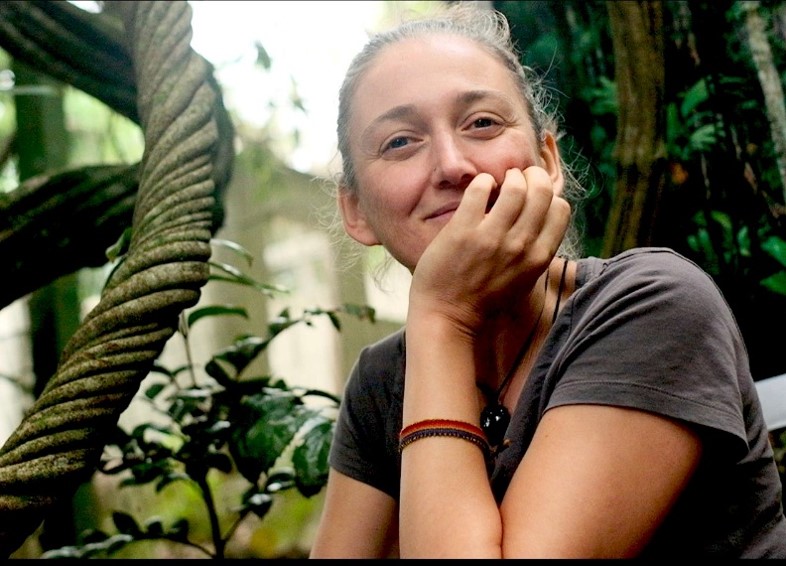
Monica Gagliano, PhD is a Research Associate Professor in evolutionary ecology and director of the Biological Intelligence (BI) Lab supported by the Templeton World Charity Foundation. Her latest project-in-the-making is a global initiative called Resonant Earth: Planetary Regeneration thru Sonic Midwifery. This talk was given at a TEDx event using the TED conference format but independently organized by a local community.
How ‘heretical’ science revealed the intelligence of Nature | TEDxSydney
Ideas that once had early scientists burnt at the stake are today accepted as the most basic facts that define our world. But heresy isn’t a thing of the past — Dr. Monica Gagliano has faced criticism throughout her career for her work that pushes the boundaries of accepted science. Her pioneering work has demonstrated, for the first time, that plants emit their own ‘voices’ and detect and respond to the sounds of their environments. In this talk, Monica introduces us to her latest research project, that might be her most ‘heretical’ work yet.
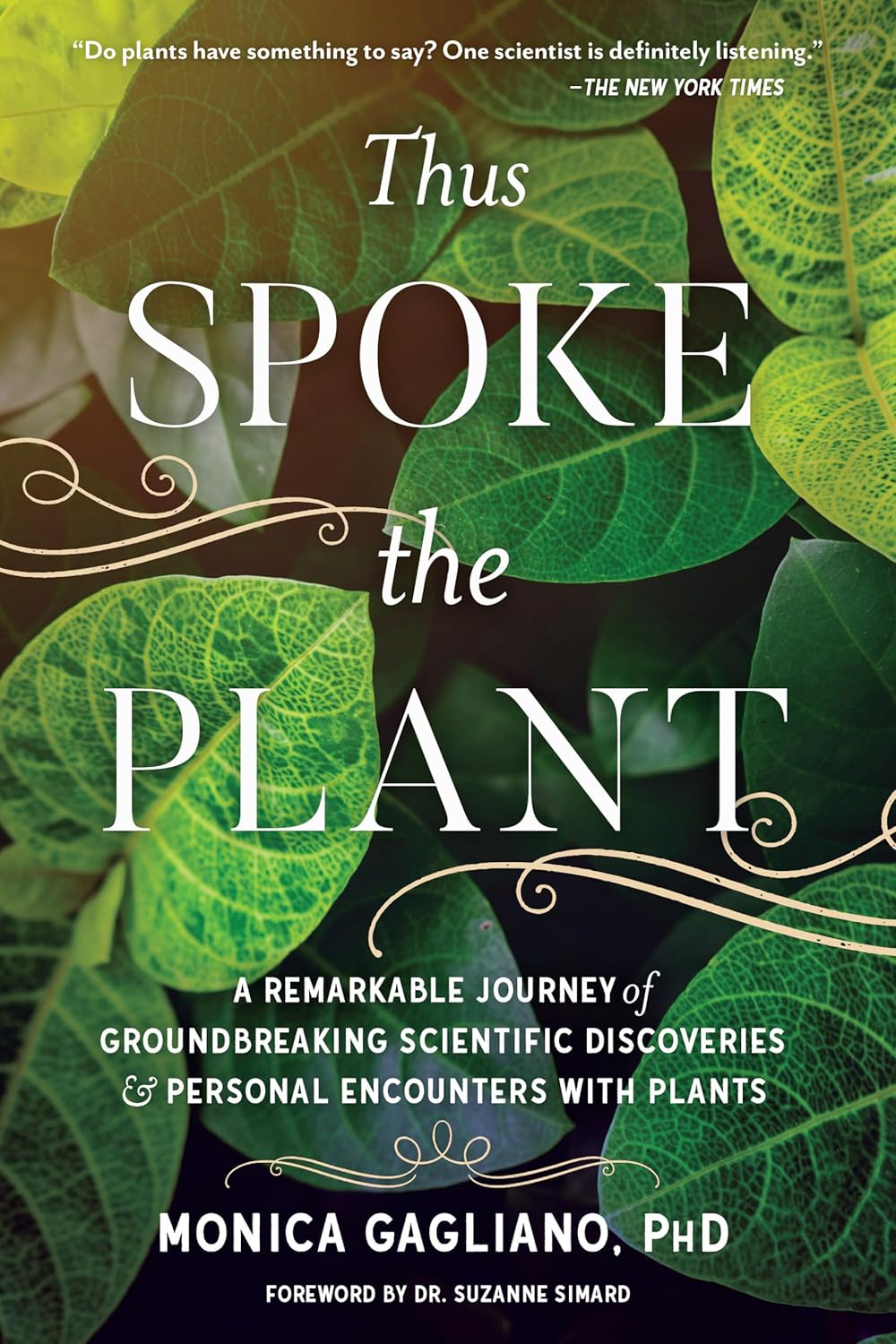
Thus Spoke the Plant
by Monica Gagliano (2018)
By transcending the view of plants as the objects of scientific materialism, Monica Gagliano encourages us to rethink plants as people-beings with subjectivity, consciousness, and volition, and hence having the capacity for their own perspectives and voices. She has pioneered the brand-new research field of plant bioacoustics, for the first time experimentally demonstrating that plants emit their own ‘voices’ and, moreover, detect and respond to the sounds of their environments. By demonstrating experimentally that learning is not the exclusive province of animals, Gagliano has re-ignited the discourse on plant subjectivity and ethical and legal standing. This is the story of how she made those discoveries and how the plants helped her along the way.
Winner of the Wainwright Prize, the Royal Society Science Book Prize, and the Guild of Food Writers Award • Shortlisted for the British Book Award • Longlisted for the Rathbones Folio Prize
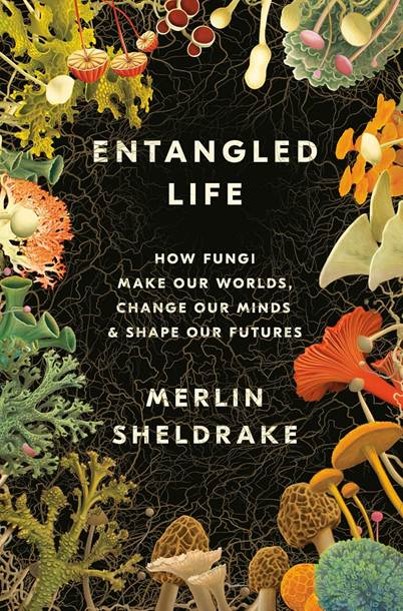
Entangled Life: How Fungi Make Our Worlds, Change Our Minds & Shape Our Futures
by Merlin Sheldrake (2020)
In the first edition of this mind-bending book, Sheldrake introduced us to this mysterious but massively diverse kingdom of life. This exquisitely designed volume, abridged from the original, features more than one hundred full-color images that bring the spectacular variety, strangeness, and beauty of fungi to life as never before.
Fungi throw our concepts of individuality and even intelligence into question. They are metabolic masters, earth makers, and key players in most of life’s processes. They can change our minds, heal our bodies, and even help us remediate environmental disaster. By examining fungi on their own terms, Sheldrake reveals how these extraordinary organisms—and our relationships with them—are changing our understanding of how life works.
Author page for Merlin Sheldrake
The Substrate of Mystery: Mycelial Networks, Mutualism, and Symbiosis
An Emergence Magazine Interview with Merlin Sheldrake
Melvin Sheldrake – How Fungi Make our Worlds
In this session, Merlin Sheldrake, the biologist and bestselling author of Entangled Life: How Fungi Make our World, drives home just how critically important fungi are and discuss the visionary work of the Society for the Protection of Underground Networks (SPUN) and its efforts to map and protect the mycorrhizal fungal communities of the planet. He also presents cutting-edge research into the flow dynamics of carbon and nutrients within mycorrhizal fungal networks.
YouTube (24:43)
The Light Eaters
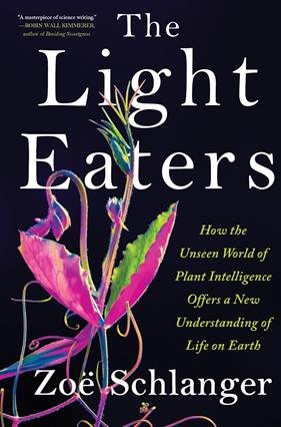
by Zoë Schlanger (2024)
The Light Eaters is a deep immersion into the drama of green life and the complexity of this wild and awe-inspiring world that challenges our very understanding of agency, consciousness, and intelligence. In this captivating exploration of plant intelligence, we see that plants, rather than imitate human intelligence, have perhaps formed a parallel system. What is intelligent life if not a vine that grows leaves to blend into the shrub on which it climbs, a flower that shapes its bloom to fit exactly the beak of its pollinator, a pea seedling that can hear water flowing and make its way toward it? Zoë Schlanger takes us across the globe, digging into her own memories and into the soil with the scientists who have spent their waking days studying these amazing entities up close.
Author Page for Zoë Schlanger
Zoë Schlanger: The New Science of Plant Intelligence
Award-winning science writer Zoë Schlanger discusses new research on how plants communicate with one another, react to sound and touch, store memories, and manipulate animals, both predators and pollinators, into doing their bidding. Should we think of plants as intelligent, even conscious? Zoë Schlanger is a staff reporter at The Atlantic, and her work has appeared in The New York Times, Newsweek, NPR, and Quartz. Her new book is titled, The Light Eaters: How the Unseen World of Plant Intelligence Offers a New Understanding of Life on Earth.
YouTube (46:23)
The Surprising Secret Life of Beavers and Why They Matter
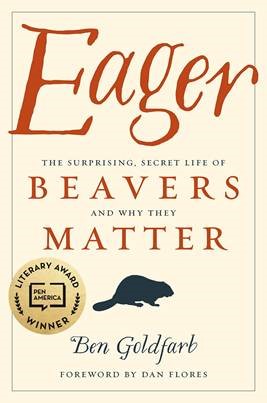
by Ben Goldfarb (2018)
In Eager, environmental journalist Ben Goldfarb reveals that our modern idea of what a healthy landscape looks like and how it functions is wrong, distorted by the fur trade that once trapped out millions of beavers from North America’s lakes and rivers. The consequences of losing beavers were profound: streams eroded, wetlands dried up, and species from salmon to swans lost vital habitat. Today, a growing coalition of “Beaver Believers”―including scientists, ranchers, and passionate citizens―recognizes that ecosystems with beavers are far healthier, for humans and non-humans alike, than those without them.
Author Page for Ben Goldfarb
Ben Goldfarb, author of “Eager: The Surprising Secret Life of Beavers and Why They Matter” (full)
Ben Goldfarb, author of award-winning “Eager: The Surprising Secret Life of Beavers and Why They Matter,” shares how writing has become the perfect way for him to share his love of nature and passion for conservation.
YouTube (28:08)
Being Salmon, Being Human: Encountering the Wild in Us and Us in the Wild
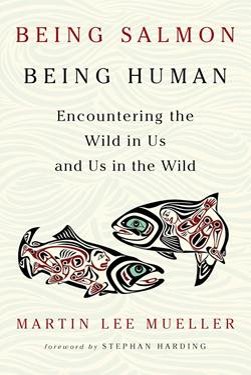
by Martin Lee Mueller (2017)
Being Salmon, Being Human is both a philosophical and a narrative work, rewarding readers with insightful interpretations of major philosophers―Descartes, Heidegger, Abram, and many more―and reflections on the human–Earth relationship. It stands alongside Abram’s Spell of the Sensuous and Becoming Animal, as well as Andreas Weber’s The Biology of Wonder and Matter and Desire―heralding a new “Copernican revolution” in the fields of biology, ecology, and philosophy. Being fully human, Martin Lee Mueller argues, means experiencing the intersection of our horizon of understanding with that of other animals. Salmon are the test case for this. Mueller experiments, in evocative narrative passages, with imagining the world as a salmon might see it, and considering how this enriches our understanding of humanity in the process.
Author Page for Martin Lee Mueller
David Abram & Martin Lee Müller: Q&A at the Oslo Wild Salmon Festival Nov. 2021 Pt. 2
Pt. 2 of 2: Q&A with ecologists and philosphers Dr. David Abram (Spell of the Sensious) & Dr. Martin Lee Müller (Being Salmon, Being Human). Filmed at the Public Library Deichman Grünerløkka, Oslo at the first Wild Salmon Festival in November 2021
YouTube (59:28)
Being Salmon, Being Human
by Martin Lee Müller
(A short reflective piece by Müller)
How do we break with a 400-year-old story of ourselves as separate from the world, and others as our subordinates, slaves? If the question is difficult to ask, I suppose answers will not come easily either. I do what I often do in such moments; I take a walk to my nearest salmon river, Akerselva, which runs right through the heart of Oslo. Salmon still hold so many lessons in store. Just now they are migrating upriver once again, past old factories and kindergartens and karaoke bars, ready to spawn a new generation.
Every autumn a new generation reenacts their ancient, existential drama. When it’s done, most of them will die and rot by the river banks, or be consumed by birds or foxes or insects. I see a handful of them standing down there in the fast-moving current, just beneath the bridge. I take a deep breath; a look around. And I understand that the deconstruction of the old story is already well underway: science is piecing together a richer picture of the fishes’ inner lives than ever before. Philosophers have in earnest re-discovered the world of the senses and of feelings. The double-split between humans and animals, and between body and mind, is well underway to being mended. It’s like my mentor, David Abram, once said: we are many sets of eyes staring out at each other from the same, living body.