The First People: History and Culture
The Early Americas
For a thousand generations or more the American continents have been home to Indigenous People. From forager to farmer, tribe to nation, they developed distinctive forms of art, writing, mathematics, advanced political and social structures, and sustainable agricultural practices. Most notably, their daily lives were rooted in an earth-centered worldview aligned with the cosmos. This cosmological orientation gave rise to complex religious rituals, landscapes aligned with the heavens, and architectural structures that were daily reminders of the cyclical nature of time and their place within the cosmos.
Native farming ingenuity was evident in the foragers of the California region where the Indigenous People assumed responsibility for the dispersal of various plant species by harvesting thesewild plants and developing conservative ecological practices. In Southwestern United States maize and other cultivated plants were seamlessly integrated into the hunter-gatherer economy without disrupting the environment or sociocultural context of the people involved. The seafaring Northwest coast cultures developed lavish lifestyles and extraordinary ceremonialism integrating property and rank based on reciprocity with the human and the other-than-human world. The Great Plains bison-hunting and corn-growing cultures hunted game of all kinds, gathering seeds, tubers, nuts, and berries. For the Northeast cultures their ideals of government were embodied in a tiny weed that they eventually nurtured into the corn plant. Their consensus form of democratic governance, monitored by their matrilineal clans known as the “wisdom keepers,” emulated the cooperative approach of the “three sisters” corn, beans, and squash.
Epistemology: The Indigenous People knew with the certainty of lived experience that everything was alive, and all life forms were manifestations of the interwoven web of creation. Everything was animate and imbued with spirit, consisting of energy waves within a myriad of interrelationships. The peoples’ participation in this “cosmic dance” was innate to their sense of self.
Communication Styles: Their mode of communication was very contextual, grounded in observing patterns, seasonal changes, migration of animals, cosmic movements and so on. Edward T. Hall in his book entitled, Beyond Culture, describes this non-verbal communication style of observing and listening, as a high context communication style with an emphasis on reciprocal relationships based on real-world experiences.
Ceremonies: Rebirth, regeneration, and transformation are integral to ceremonial practices. A purification ritual usually precedes a ceremony, signifying the “death” of the old and the “birth” of the new. Cosmic references (still used today) are powerful ceremonial symbols, all of which reinforce a mind-set of interconnectedness and reciprocity with all life forms.
RESOURCES suggested in the list below give practical ideas on how to make this paradigm shift collectively and individually as we transition from an ideology and culture of colonial ethnocentrism to one of decolonization and social transformation.
Lyla June 3,000 years of solutions to today’s problems (2022 TED Talk on YouTube). A truly remarkable 13:28 minute video by a Diné scholar about what we Americans of today could learn from our historic indigenous forebears about living in harmony with and showing respect for the earth.
.
Native America (2018) by PBS-Episodes 1-3. Available to stream on PBS or on Amazon Prime. Heavily substantiated with artifacts and astonishing visuals and interviews with present day Indigenous scholars and leaders.
Episode 1: From Caves to Cosmos (54 minutes)
Summary: As recent as 25,000+ years ago, the Americas was another world thriving with a hundred million people connected by elaborate roads, bridges, and social networks, spanning continents with some of the world’s largest cities aligned to the heavens. It is the birthplace of some of the greatest civilizations on Earth.
Extensive archeological evidence is presented from the largest cities such as Chaco in New Mexico, Teotihuacan in Mexico, and Pueblo Bonito in New Mexico. Artifacts from art in caves, architecture, and cities show how the Indigenous Peoples lived with a sense of place, firmly balanced within the Earth and Cosmic realms. The structures reveal advanced mathematical and engineering skills used to track movements of sun, moon, and stars. The movements of the heavenly bodies were used for directional maps of their “space” and to track time. Time was place-based and human beings were aligned with both the Earthly and cosmic dimensions of space-time.
Core Values:
• Worldview of being one with the Earth and Cosmos.
• Personal alignment with this core belief is essential for continuing the reciprocal and cyclical nature of life, both individually and collectively.
• Living in balance with nature has cosmic implications because human beings are a microcosm of the Cosmos.
Episode 2: Nature to Nations (54 minutes)
Summary: The roots of Native America stretch back more than 13,000 (or 60,000) years to America’s original explorers who created a new world from North to South America. They shared a belief of a deep connection to Earth, Sky, Water, and all living things. People viewed themselves as part of the forest as much as the forest was viewed as part of the people. Ceremonies expressed and reinforced a worldview of being connected to all of creation.
1150 AD the Haudenosaunee formed the first democracy that inspired the constitution of the United States. Their ideals of government were embodied in a tiny weed that they eventually nurtured into the corn plant. Corn is more than a crop. It is a teacher always looking to the Seventh Generation when making decisions.
The People practiced sustainable agricultural practices embodied in the “three sisters:” corn, beans, and squash. Human beings emulated the cooperative approach of the three sisters. Their longhouses served as a metaphor for cooperation, where the five tribes (Onondaga, Oneida, Cayuga, Seneca, and Mohawk) formed a confederation of tribes. Their core principle of governance is to serve the people and to adopt sustainable practices that ensure that the next seven generations will thrive. They adopted their democratic Confederacy 600 years before the U.S. Constitution. Theirs was the first democracy in the Americas.
In Central America corn built cities, the Indigenous in the Atlantic N.E. and the Pacific N.W. tribes established a national identity building on lessons from nature—Native Americans create some of the greatest nations on Earth. Their agricultural practices feed 100,000,000 people today through the development of new foods from wild plants: potatoes, tomatoes, peanuts, beans, squash, corn, and chocolate.
Episode 3: Cities of the Sky (54 minutes)
Summary: Across two continents Native Peoples shared a belief that their lives were intimately connected to the heavens. They came from the stars and saw themselves as guardians of life on this planet. This cosmic orientation is evident in their architectural structures that were carefully aligned with the movements of the sun, moon, and stars. Annual ceremonial rites reflected a deep and profound connection not only to the cosmos, but the cycles of life interwoven into their daily lives and renewed ceremonially.
Just outside of St. Louis on the banks of the Mississippi is a giant hill ten stories high surrounded by hundreds more mounds. Remnants of temples, markets, plazas, sports fields, and thousands of homes reveal that Cahokia was home to thousands of people. Artifacts reveal that Cahokia is a thousand years older than the Egyptian pyramids.
The Inca and the Aztec cultures also reveal similar cosmic beliefs related to the movement of the sun, moon, and stars. Mayan glyphs further reinforce the profound knowledge and sophistication of these cities in the sky.
Today the Choctaws share these same aspects of their ancestral ceremonial rites that demonstrate their commitment to an ancestral knowledge of connection to the living Earth and the cosmos.
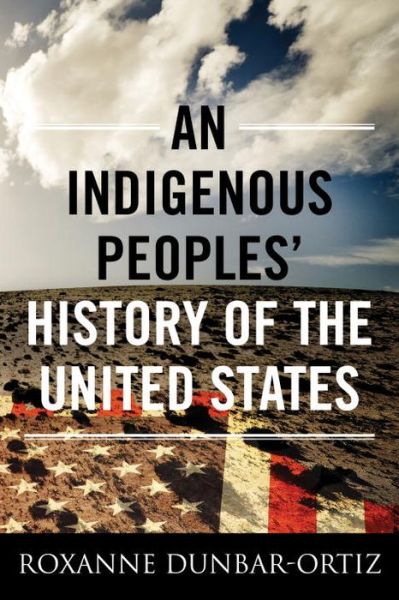
This well-researched history counters the common narrative that Indigenous Peoples were uncivilized and primitive savages. An adapted version for youth is also available.
Chapter 1 Follow the Corn [PDF shared on Google Drive] highlights the reciprocal relationship between Indigenous People and the earth.
Chapter 2 Culture of Conquest [PDF shared on Google Drive] The discovery of gold and silver in America, the extirpation, enslavement and entombment in mines of the aboriginal population, the beginning of the conquest and looting of the East Indies, the turning of Africa into a warren for the commercial hunting of black-skins, signaled the rosy dawn of the era of capitalist production. These idyllic proceedings are the chief moments of prior accumulation.
The entire book is posted online as a downloadable PDF file.
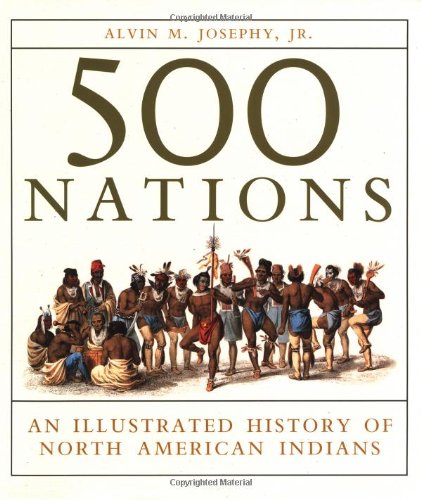
500 Nations, An Illustrated History of North American Indians (1994) is a beautifully illustrated, balanced account of Indigenous Peoples from prehistoric times through the European conquest written by acclaimed author Alvin Josephy, Jr. It provides a comprehensive overview of 500 years of American History and complements the DVD series entitled 500 Nations that gives a powerful visual and cinematic quality to the 500-year history of the Indigenous Peoples in the Americas. The entire DVD series is available to purchase and is available to stream on YouTube.
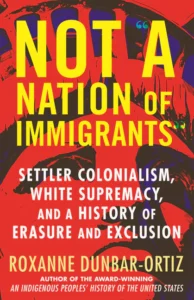
Roxanne Dunbar Ortiz. Not a Nation of Immigrants, 2022.
Whether in political debates or discussions about immigration around the kitchen table, many Americans, regardless of party affiliation, will say proudly that we are a nation of immigrants. In this bold new book, historian Roxanne Dunbar-Ortiz asserts this ideology is harmful and dishonest because it serves to mask and diminish the US’s history of settler colonialism, genocide, white supremacy, slavery, and structural inequality, all of which we still grapple with today.
Mahmood Mamdani. Neither Settler nor Native: The Making and Unmaking of Permanent Minorities, 2022.
In case after case around the globe―from Israel to Sudan―the colonial state and the nation-state have been constructed through the politicization of a religious or ethnic majority at the expense of an equally manufactured minority.
This model emerged in America, where genocide and internment on reservations created a permanent native minority. In Europe, this template would be used both by the Nazis and the Allies. “A deeply learned account of the origins of our modern world…Mamdani rejects the current focus on human rights as the means to bring justice to the victims of this colonial and postcolonial bloodshed. Instead, he calls for a new kind of political imagination…Joining the ranks of Hannah Arendt’s Imperialism, Frantz Fanon’s The Wretched of the Earth, and Edward Said’s Orientalism, this book is destined to become a classic text of postcolonial studies and political theory.
―Moustafa Bayoumi, author of How Does It Feel to Be a Problem?
F. David Peat: Blackfoot Physics
Red Wheel / Weiser, Boston, 2005.
In an edifying synthesis of anthropology, history, metaphysics, cosmology, and quantum theory, Peat compares the medicines, the myths, the languages and the entire perceptions of reality of the Western and indigenous peoples. What becomes apparent is the amazing resemblance between indigenous teachings and some of the insights that are emerging from modern science, a congruence that is as enlightening about the physical universe as it is about the circular evolution of humanity’s understanding.
YouTube Audio: (47:53)
The text for Chapter 1: Spirits of Renewal is available on the author’s (rather old school) web site.
Indigenous Knowledge and Western Science: talk by Dr. Leroy Little Bear
Indigenous academic Leroy Little Bear compares the foundational base of Blackfoot knowledge to quantum physics to an attentive audience at The Banff Centre as part of the Indigenous Knowledge and Western Science: Contrasts and Similarities event.
Leroy Little Bear is a member of the Blood Tribe of the Blackfoot Confederacy. He has served as a legal and constitutional advisor to the Assembly of First Nations and has served on many influential committees, commissions, and boards dealing with First Nations issues. He is a faculty member of Indigenous Leadership and Management at The Banff Centre.. He has maintained a lifelong professional interest in the philosophy of science, especially theoretical physics, from a First Nations perspective.
Native Science: Natural Laws of Interdependence
by Gregory Cajete, 1999.
In Native Science, Gregory Cajete “tells the story” of Indigenous science as a way of understanding, experiencing, and feeling the natural world.
He points to parallels and differences between the Indigenous science and Western science paradigms, with special emphasis on environmental/ecological studies. After discussing philosophical foundations, Cajete addresses such topics as history and myth, primal elements, social ecology, animals in myth and reality, plants and human health, and cosmology and astronomy.
In the Indigenous view, we human observers are in no way separate from the world and its creatures and forces. Because all creatures and forces are related and thus bear responsibility to and for one another, all are co-creators. Five centuries ago Europeans arrived on the American continent, but they did not listen to the people who had lived for millennia in spiritual and physical harmony with this land. In a time of global environmental degradation, the science and worldview of the continent’s First Peoples offer perspectives that can help us work toward solutions.
Indigenous Knowledge and Western Science
2015 Talk by Dr. Gregory Cajete. YouTube Video: (29:04)
Lori Alvord and Elizabeth Cohen, The Scalpel and the Silver Bear: The First Navajo Woman Surgeon Combines Western Medicine and Traditional Healing , 2000.
The first Navajo woman surgeon combines western medicine and traditional healing. A spellbinding journey between two worlds, this remarkable book describes surgeon Lori Arviso Alvord’s struggles to bring modern medicine to the Navajo reservation in Gallup, New Mexico—
and to bring the values of her people to a medical care system in danger of losing its heart. Dr. Alvord left a dusty reservation in New Mexico for Stanford University Medical School, becoming the first Navajo woman surgeon. Rising above the odds presented by her own culture and the male-dominated world of surgeons, she returned to the reservation to find a new challenge. In dramatic encounters, Dr. Alvord witnessed the power of belief to influence health, for good or for ill. She came to merge the latest breakthroughs of medical science with the ancient tribal paths to recovery and wellness, following the Navajo philosophy of a balanced and harmonious life, called Walking in Beauty. And now, in bringing these principles to the world of medicine, The Scalpel and the Silver Bear joins those few rare works, such as Healing and the Mind, whose ideas have changed medical practices-and our understanding of the world.
Integrating Healing Properties of Traditional Native Medicine with Western Practice
Dr. Lori Arviso Alvord, M.D. YouTube video (1:27:13)