Creating a New Story: A Website of Themed Resources
This website offers numerous resources to help you on your journey, organized by theme. There are multiple options that appeal to all levels of prior knowledge, interest, and time. You have the option of reading books, articles, listening to podcasts, and/or viewing videos by both Indigenous and Western experts. Each Theme page (see site menu) begins with a short introduction, followed by links to a full library of resources related to that theme. You do not have to follow any particular sequence but are free to begin where your interests are and then expand to the other areas as you are inspired to do so. The goal is to help you arrive at a deep sense of interrelationships, requiring you to form a constellation of concepts, values, perceptions, and shared practices that will help you understand a shared reality within a community. In other words, a transformative paradigm shift. (Kuhn, 1962)
Teaching Resources on Indigenous topics for Grades K-12
Where links that follow will take you: The beginning text for each Theme (below) is a link to this site’s page about the theme. At the end of each theme’s description, there is a link to a shared online document with resources relevant to that theme.
Newtonian Universe back to Turtle Island
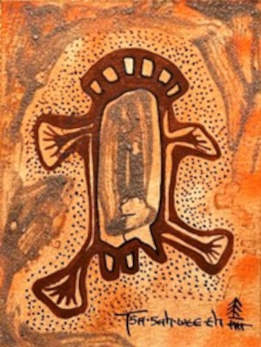
Newtonian Universe to Turtle Island: The Newtonian view of the universe as a huge machine with human beings dominant and separate from the universe is a story of the past. It is a story of separation. It is a story of colonization and “power over.” In contrast, decolonization is a story of connection where human beings realize “they are nature” and are embedded within the cycles of the living Earth and on the cusp of a new story that senses a symbiotic relationship with the living Earth, with “Turtle Island.”
(Link: Newton to Turtle Island)
Economics: Capitalism to the Potlatch
Economics: Capitalism to the Potlatch takes you to a transformation of economics rich with examples from the Western culture that is beginning to look more like the traditional Indigenous practices of sharing and building commons and cooperative living practices. Economics dominates societal decision-making for the future, guides multi-billion-dollar investments, and shapes responses to climate change, inequality, and other environmental and social challenges that define contemporary times. It is a worldview that requires systemic change–a transformative shift from the present Capitalist Model to a way of living that looks much like the Potlatch–a gift-giving economy.
(Link: Economics to the Potlatch)
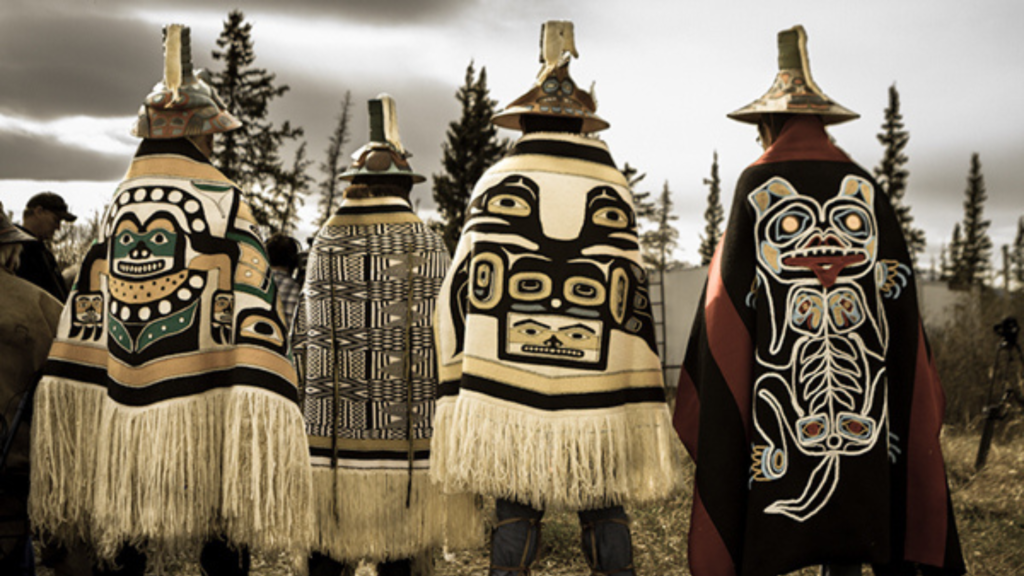
The Cosmic Dance: Intelligence in Nature
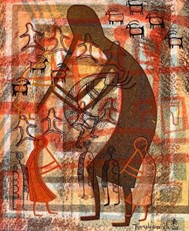
The Cosmic Dance: Intelligence in Nature makes the radical assumption that human beings are integral to the cosmic dance with a deep sense of nature’s innate intelligence and that everything is animate and alive with an intelligence from which human beings must learn in order to better understand their own sense of continuity with the other than human world that gives them a glimpse of what it means to be fully human. Within this worldview all forms of life on this planet are engaged in a web of relationships. As Cheyenne River Lakota elder Tiokasan Ghosthorse notes, “Mitakuye Oyasin–all my relations actually means the universe is speaking through the energy of the relationship between you and I and all things, and therefore everything is related to everything else.” These relationships are central to defining one’s role within the community of living things.
The First People: Past and Present
The First People: History and Culture: For a thousand generations or more the American continents have been home to the first peoples in the western hemisphere. Their daily lives were rooted in an earth-centered worldview aligned with the natural rhythms of nature. Their consensus form of democratic governance, monitored by their matrilineal clans known as the “wisdom keepers,” emulated the cooperative approach of the “three sisters” corn, beans, and squash. However, a look at the past must also consider the 500 years of settler colonialism, genocide, white supremacy, slavery and structural inequality and the aftermath of this history that contemporary First Peoples’ still grapple with today from having lost too much.
Stolen Children: The Missionary Conquest of Boarding Schools
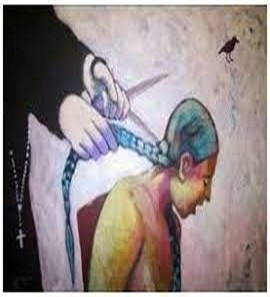
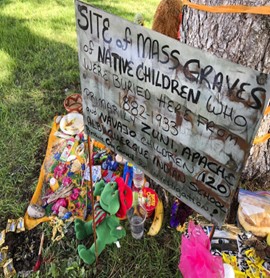
Stolen Children: The Missionary Conquest of Boarding Schools: The settler colonists initiated the Missionary Conquest through forced removal of children from their family and cultural environs so critical to children who are biosocial. Within the First People Communities the children had multiple and multi-aged mentors who encouraged their interests and gifts. Through careful guidance they created space to hold more of their story as a human being, incorporating the wisdom of the past into the present, knowing that there was no separation between them and the other life-forms. They knew what it meant to be human and to be attuned to the beauty of life as it cycled around and through them. They had a profound sense of self. Through forced assimilation the children were brutally and violently wrenched from their families and cultural ways for long periods, sometimes four or more years. And many of them died and never returned home. Their traditional cultural practices and shared wisdom were forcibly replaced with Christianity. You must mindfully prepare yourself for this incredibly sad story of forced assimilation and cultural eradication (and sometimes death) that happened largely through missionary schools.