NEWTONIAN UNIVERSE TO TURTLE ISLAND
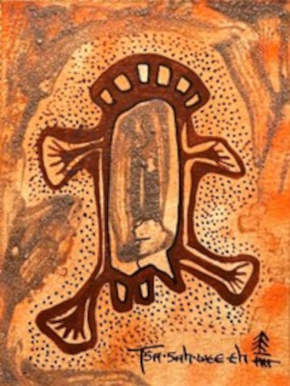
The Newtonian view of the universe as a huge machine with human beings dominant and separate from the Earth and the universe is a story of the past. It is a story of separation from nature. It is a story of colonization and “power over” others with endless wars and competition to the “last man standing.” In contrast, decolonization is a story of cooperation where human beings realize that we are embedded within the cycles of the living Earth and on the cusp of a new story that senses our symbiotic relationship with the living Earth, with “Turtle Island.”
This transition into a new story is not an intellectual journey. According to eco-evangelist Thomas Berry, “We must invent, or reinvent, a sustainable human by a descent into our pre-rational, our instinctive integrity. What is needed is not transcendence but “inscendence,” not the brain but the gene.” Ultimately in this new story we are life intersecting with itself, waiting to be voiced, (to be storied) vibrating almost urgently with a cellular persistence to return to our ancestral roots—to our own “Indigeneity.”
The resources listed below give you an opportunity to explore some books and videos of upcoming authors/leaders who are each tapping into their Indigeneity and ancestral wisdom.
You are invited to begin your journey with a short meditation by immersing yourself in an experience of Breathing with the Forest by Marshmallow Laser Feast.
Reconnecting with Earth and Each Other
with Claudia Pena and Erin Matariaki Carr (Aotearoa)
Through colonization, hyper capitalism, and unaddressed trauma, many of us have forgotten how to play our part in the orchestra of the natural world. Join a conversation between two remarkable activists and legal practitioners from different continents, working in different communities, but who happen to share a belief in the power of creative expression to help us reconnect to the entire web of life. They discuss interdependence, forgotten ways of relating to each other and all species, and how well-harmonized songs can bring delight and balance to the human spirit, to trees and plants and to our fellow fauna.
[Bioneers] YouTube (12:24)
The Restorative Revolution and A River of Reciprocity
YouTube (11:32) [Bioneers]
with Sammy Gensaw III
Sammy Gensaw III, a dynamic young Yurok leader, advocates for returning to our ancestral wisdom. But we must all do it together. He shares some of his experiences working for ecological and cultural revival along the Klamath River, central to his people’s identity and livelihood. He discusses how the epic struggle to remove destructive dams required drawing deeply from ancestral wisdom, modern science, and cutting-edge activism, and how Indigenous leadership can play a central role in rekindling our connections to land and water and ushering in a restorative, resilient future for all of us.
The Sacred Balance: Rediscovering Our Place in Nature
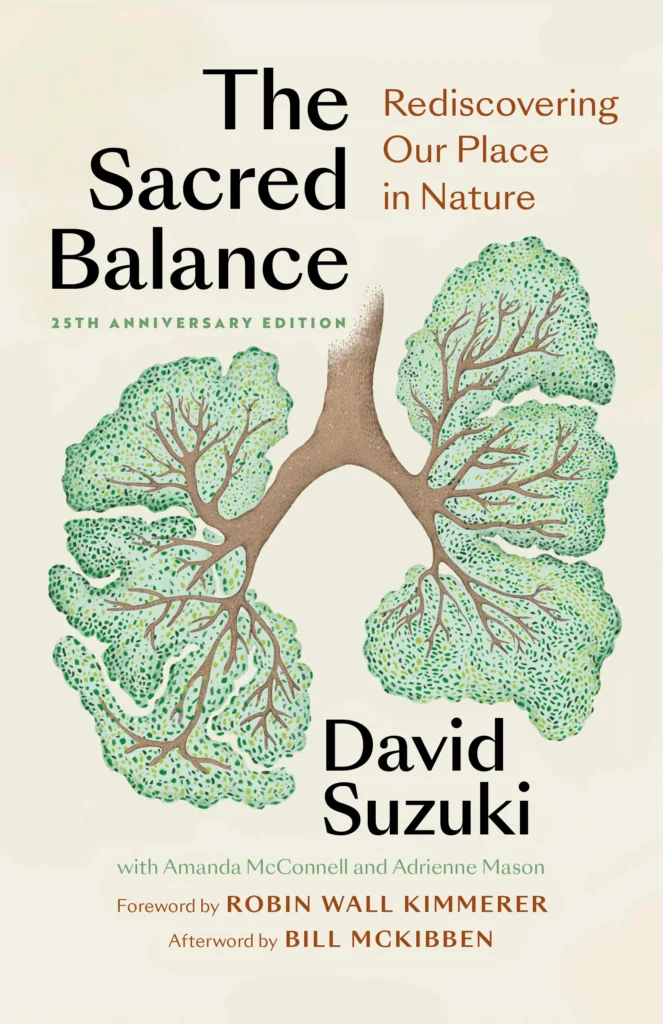
by David Suzuki, 2007. [Greystone Books]
The author explains how people are genetically programmed to crave the company of other species, and how people suffer enormously when they fail to live in harmony with them. Suzuki analyzes those deep spiritual needs, rooted in nature, that are a crucial component of a loving world. Drawing on his own experiences and those of others who have put their beliefs into action, The Sacred Balance is a powerful, passionate book with concrete suggestions for creating an ecologically sustainable, satisfying, and fair future by rediscovering and addressing humanity’s basic needs.
David Suzuki Witnesses the Unraveling
YouTube (25:35)
Oren Lyons – To Survive, We Must Transform Our Values
YouTube (32:27)
Braiding Sweetgrass: Indigenous Wisdom, Scientific Knowledge and the Teaching of Plants
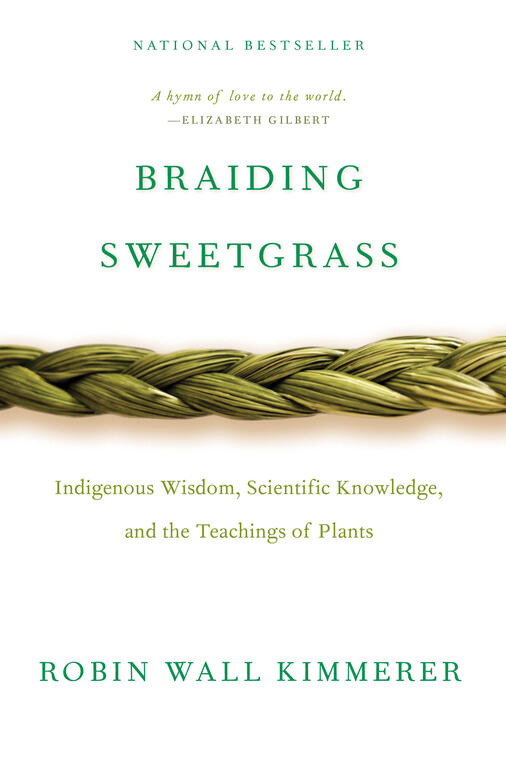
by Robin Wall Kimmerer, 2015.
As a botanist and professor of plant ecology, Robin Wall Kimmerer has spent a career learning how to ask questions of nature using the tools of science. As a Potawatomi woman, she learned from elders, family, and history that the Potawatomi, as well as a majority of other cultures indigenous to this land, consider plants and animals to be our oldest teachers.
In Braiding Sweetgrass, Kimmerer brings these two lenses of knowing together to reveal what it means to see humans as “the younger brothers of creation”. As she explores these themes, she circles toward a central argument: The awakening of a wider ecological consciousness requires the acknowledgement and celebration of our reciprocal relationship with the world. Once we begin to listen for the languages of other beings, we can begin to understand the innumerable life-giving gifts the world provides us and learn to offer our thanks, our care, and our own gifts in return.
GIFTS OF THE LAND | A Guided Nature Tour with Robin Wall Kimmerer | The Commons KU
YouTube (20:48)
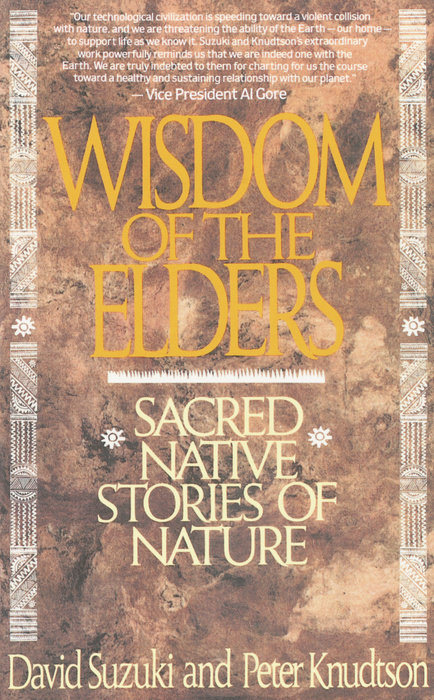
Wisdom of the Elders: Sacred Native Stories of Nature
by David Suzuki, 1993.
An in-depth, meticulously documented exploration of the ecological wisdom of Native Peoples from around the world
Arranged thematically, Wisdom of the Elders contains sacred stories and traditions on the interrelationships between humans and the environment as well as perspectives from modern science, which more often than not validate the sacred, ancient Wisdom of the Elders. Native peoples and environments discussed range from the Inuit Arctic and the Native Americans of the Northwest coast, the Lakota of the Plains, and the Pueblo, Hopi, and Dine (aka Navajo) of the Southwest to the Australian Outback, to the rich, fecund tropics of Africa, Malaysia, and the Amazon.
“Our technological civilization is speeding toward a violent collision with nature, and we are threatening the ability of the Earth—our home—to support life as we know it. Suzuki and Knudtson’s extraordinary work powerfully reminds us that we are indeed one with the Earth. We are truly indebted to them for charting for us the course toward a healthy and sustaining relationship with our planet.”—Vice President Al Gore
Native Science: Natural Laws of Interdependence
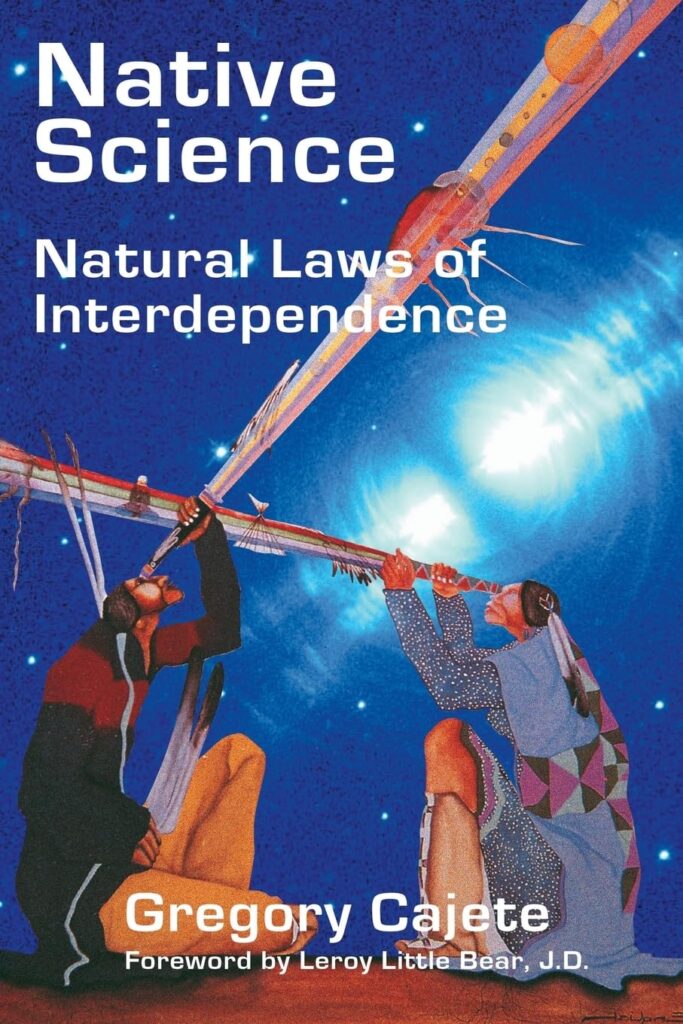
by Gregory Cajete, 1999.
In Native Science, Gregory Cajete “tells the story” of Indigenous science as a way of understanding, experiencing, and feeling the natural world. He points to parallels and differences between the Indigenous science and Western science paradigms, with special emphasis on environmental/ecological studies. After discussing philosophical foundations, Cajete addresses such topics as history and myth, primal elements, social ecology, animals in myth and reality, plants and human health, and cosmology and astronomy.
In the Indigenous view, we human observers are in no way separate from the world and its creatures and forces. Because all creatures and forces are related and thus bear responsibility to and for one another, all are co-creators. Five centuries ago Europeans arrived on the American continent, but they did not listen to the people who had lived for millennia in spiritual and physical harmony with this land. In a time of global environmental degradation, the science and worldview of the continent’s First Peoples offer perspectives that can help us work toward solutions.
Indigenous Knowledge and Western Science
2015 Talk by Dr. Gregory Cajete.
YouTube Video: (29:04)
Nature and the Human Soul: Cultivating Wholeness and Community in a Fragmented World
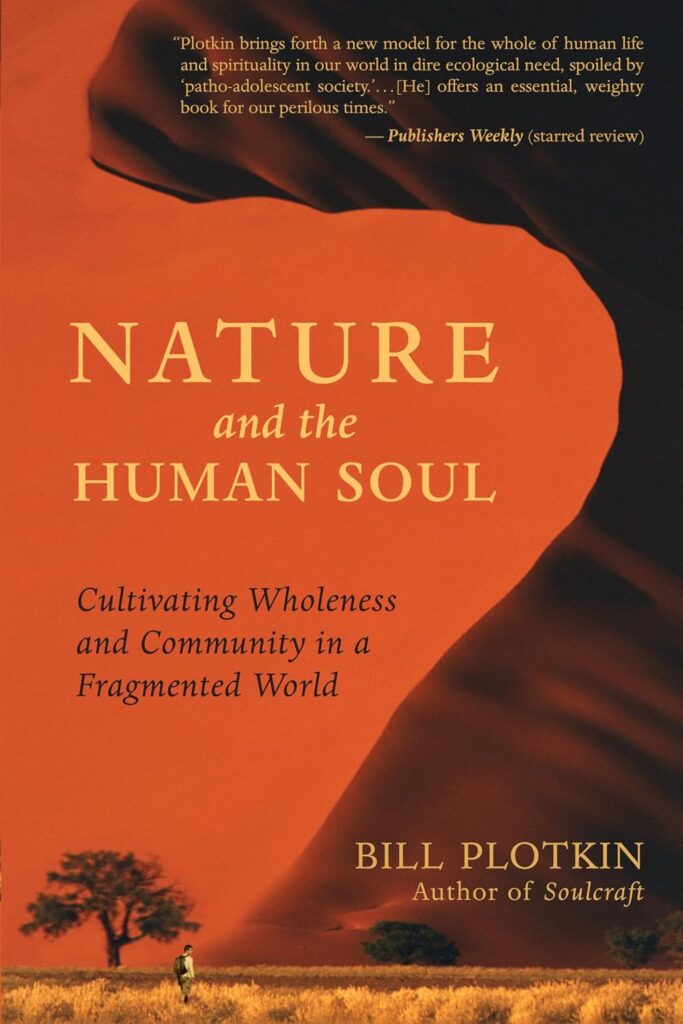
by Bill Plotkin. 2007.
[New World Library | Animas Institute]
Addressing the pervasive longing for meaning and fulfillment in this time of crisis, Nature and the Human Soul introduces a visionary ecopsychology of human development that reveals how fully and creatively we can mature when soul and wild nature guide us. Depth psychologist and wilderness guide Bill Plotkin presents a model for a human life span rooted in the cycles and qualities of the natural world, a blueprint for individual development that ultimately yields a strategy for cultural transformation.
Nature And The Human Soul
Bill Plotkin YouTube Video: (9:54)
The Biology of Wonder: Aliveness, Feeling, and the Metamorphosis of Science
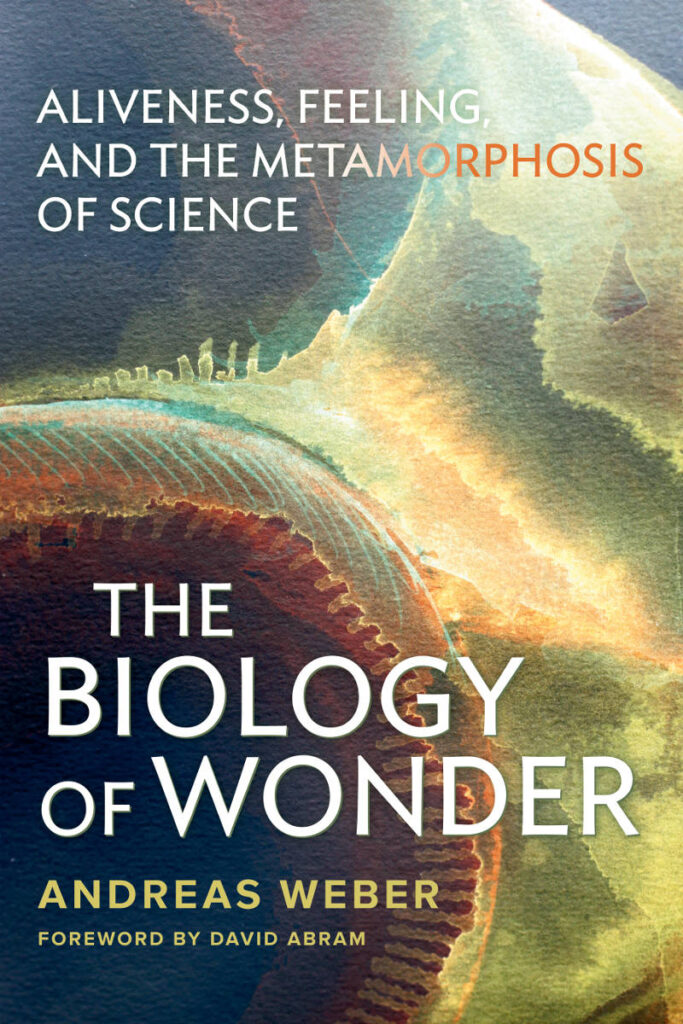
by Andreas Weber, 2016.
A new way of understanding our place in the web of life from a scholar praised for his “graceful prose” (Publishers Weekly).
The disconnection between humans and nature is perhaps one of the most fundamental problems faced by our species today. This schism is arguably the root cause of most of the environmental catastrophes unraveling around us. Until we come to terms with the depths of our alienation, we will continue to fail to understand that what happens to nature also happens to us.
In The Biology of Wonder Andreas Weber proposes a new approach to the biological sciences that puts the human back in nature. He argues that feelings and emotions, far from being superfluous to the study of organisms, are the very foundation of life. From this basic premise flows the development of a “poetic ecology” which intimately connects our species to everything that surrounds us―showing that subjectivity and imagination are prerequisites of biological existence.
Written by a leader in the emerging fields of biopoetics and biosemiotics, The Biology of Wonder demonstrates that there is no separation between us and the world we inhabit, and in so doing it validates the essence of our deep experience. By reconciling science with meaning, expression, and emotion, this landmark work brings us to a crucial understanding of our place in the rich and diverse framework of life―a revolution for biology as groundbreaking as the theory of relativity for physics.
“Grounded in science, yet eloquently narrated, this is a groundbreaking book. Weber’s visionary work provides new insight into human/nature interconnectedness and the dire consequences we face by remaining disconnected.” ―Richard Louv, author of Last Child in the Woods
A Cosmos of Mutual Attraction by Andreas Weber
YouTube Video (14:92)
Spiritual Ecology: The Cry of the Earth
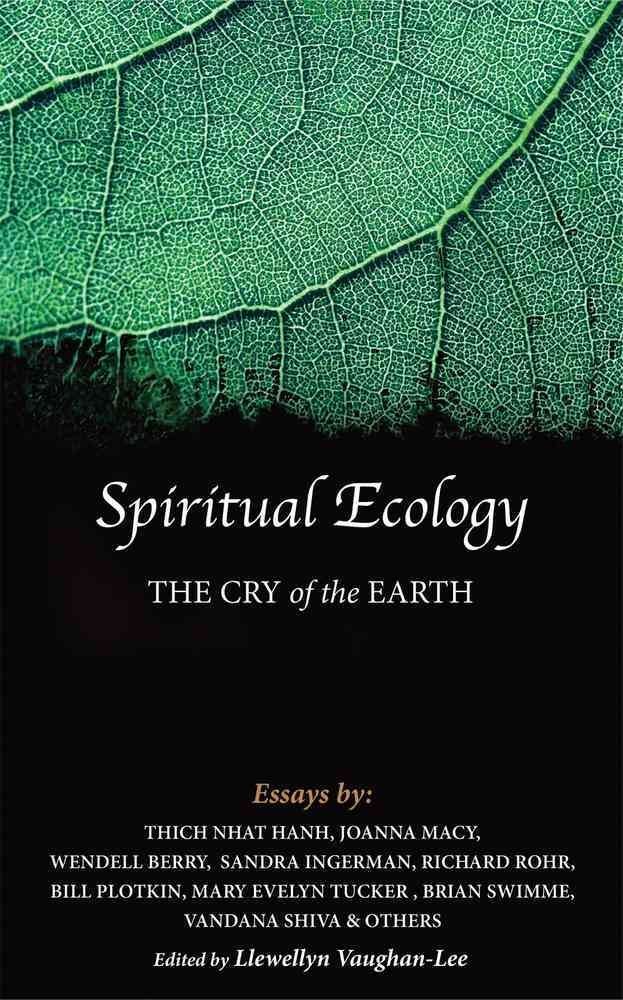
edited by Llewellyn Vaughan-Lee, 2016.
The first edition of this book fostered the emergence of the “Spiritual Ecology Movement,” which recognizes the need for a spiritual response to our present ecological crisis. It drew an overwhelmingly positive response from readers, many of whom are asking the simple question, “What can I do?” This second expanded edition offers new chapters, including two from younger authors who are putting the principles of spiritual ecology into action, working with their hands as well as their hearts. It also includes a new preface and revised chapter by Llewellyn Vaughan-Lee, that reference two major recent events: the publication of Pope Francis’s encyclical, “On Care for Our Common Home,” which brought into the mainstream the idea that “the ecological crisis is essentially a spiritual problem”; and the 2015 Paris Climate Change Conference, which saw representatives from nearly 200 countries come together to address global warming, including faith leaders from many traditions. Bringing together voices from Buddhism, Sufism, Christianity, and Native American traditions, as well as from physics, deep psychology, and other environmental disciplines, this book calls on us to reassess our underlying attitudes and beliefs about the Earth and wake up to our spiritual as well as physical responsibilities toward the planet.
YouTube Video (4:59)
The More Beautiful World Our Hearts Know is Possible
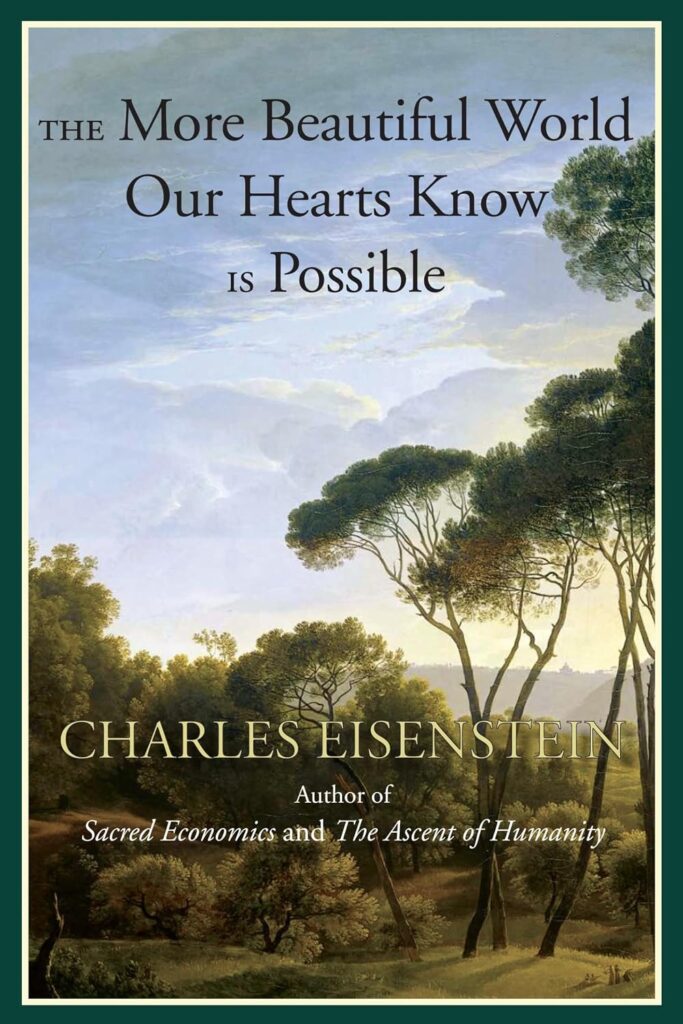
by Charles Eisenstein, 2013
In a time of social and ecological crisis, what can we as individuals do to make the world a better place? This inspirational and thought-provoking book serves as an empowering antidote to the cynicism, frustration, paralysis, and overwhelm so many of us are feeling, replacing it with a grounding reminder of what’s true: we are all connected, and our small, personal choices bear unsuspected transformational power. By fully embracing and practicing this principle of interconnectedness—called interbeing—we become more effective agents of change and have a stronger positive influence on the world.
Throughout the book, Eisenstein relates real-life stories showing how small, individual acts of courage, kindness, and self-trust can change our culture’s guiding narrative of separation, which, he shows, has generated the present planetary crisis. He brings to conscious awareness a deep wisdom we all innately know: until we get ourselves in order, any action we take—no matter how good our intentions—will ultimately be wrong-headed and wrong-hearted. Above all, Eisenstein invites us to embrace a radically different understanding of cause and effect, sounding a clarion call to surrender our old worldview of separation, so that we can finally create the more beautiful world our hearts know is possible.
With chapters covering separation, interbeing, despair, hope, pain, pleasure, consciousness, and many more, the book invites us to let the old Story of Separation fall away so that we can stand firmly in a Story of Interbeing.
A beacon of hope in the face of our current world crises, this uplifting book demonstrates how embracing our interconnectedness is key to world transformation
“The More Beautiful World Our Hearts Know Is Possible” Charles Eisenstein at Wanderlust’s Speakeasy
YouTube (29:15)
Sacred Instructions: Indigenous Wisdom for Living Spirit Based Change
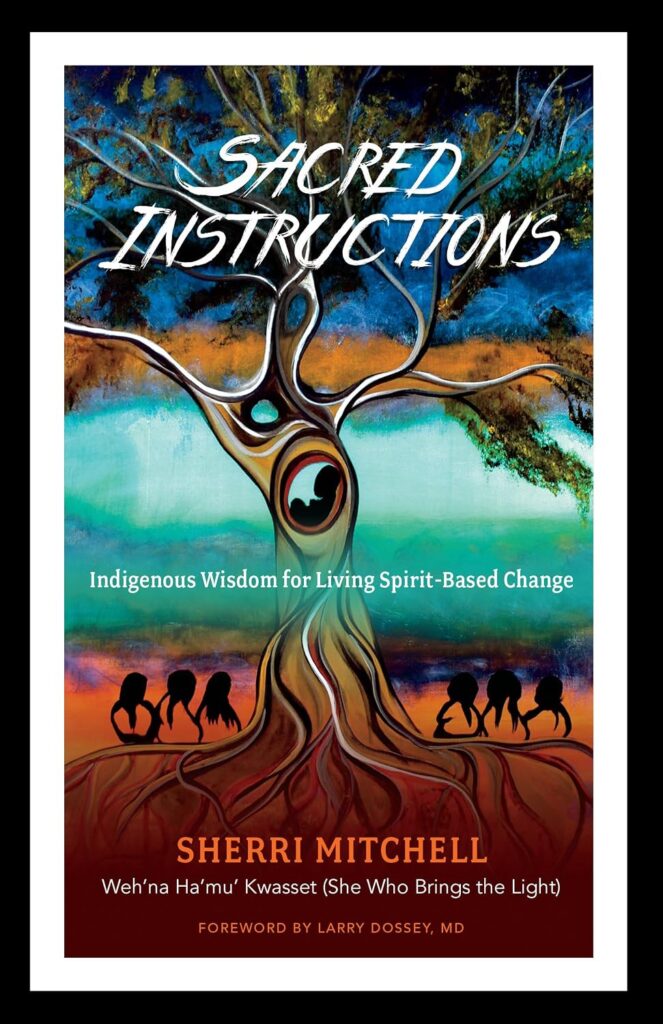
Drawing from her Penobscot ancestral knowledge, as well as her experience as an attorney and activist, Sherri Mitchell addresses some of the most crucial issues of our day—including indigenous land rights, environmental justice, and our collective human survival. Sharing the gifts she has received from the elders of her tribe, the Penobscot Nation, she asks us to look deeply into the illusions we have labeled as truth and which separate us from our higher mind and from one another.
Sacred Instructions explains how our traditional stories set the framework for our belief systems and urges us to decolonize our language and our stories. It reveals how the removal of women from our stories has impacted our thinking and disrupted the natural balance within our communities.
For all those who seek to create change, this book lays out an ancient world view and set of cultural values that provide a way of life that is balanced and humane, that can heal Mother Earth, and that will preserve our communities for future generations.
A “profound and inspiring” collection of ancient indigenous wisdom for “anyone wanting the healing of self, society, and of our shared planet” (Peter Levine, author of Waking the Tiger: Healing Trauma).
Sacred Instructions: Indigenous Wisdom for Living Spirit-Based Change
YouTube (1:12:19)
Blackfoot Physics: A Journey into the Native American Worldview
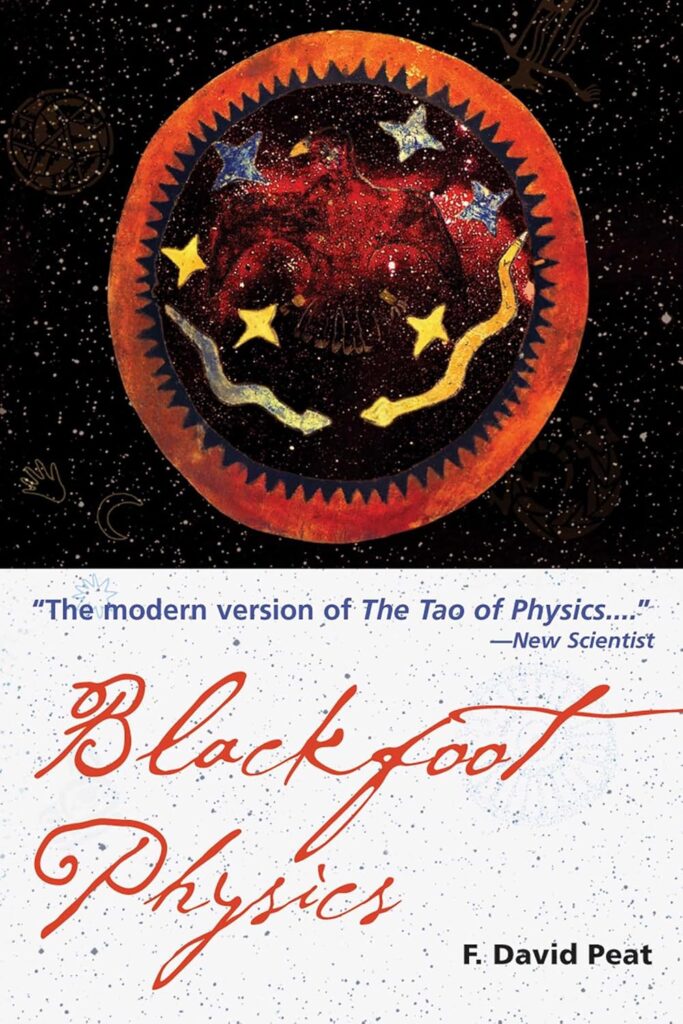
by F. David Peat, 2005
One summer in the 1980s, theoretical physicist F. David Peat went to a Blackfoot Sun Dance ceremony. Having spent all of his life steeped in and influenced by linear Western science, he was entranced by the Native American worldview and, through dialogue circles between scientists and native elders, he began to explore it in greater depth.
Blackfoot Physics is the account of his discoveries. In an edifying synthesis of anthropology, history, metaphysics, cosmology, and quantum theory, Peat compares the medicines, the myths, the languages, the entire perceptions of reality of the Western and indigenous peoples. What becomes apparent is the amazing resemblance between indigenous teachings and some of the insights that are emerging from modern science, a congruence that is as enlightening about the physical universe as it is about the circular evolution of humanity’s understanding. Through Peat’s insightful observations, he extends our understanding of ourselves, our understanding of the universe, and how the two intersect in a meaningful vision of human life in relation to a greater reality.
The text for Chapter 1: Spirits of Renewal is available on the author’s (rather old school) web site.
YouTube Audio: (47:53)